Outdoor Safety
Hiking Safety Guide for Quebec and Canadian Trails
Discover essential hiking safety tips for Quebec and Canadian trails, including preparation, weather awareness, equipment recommendations, and group hiking best practices.
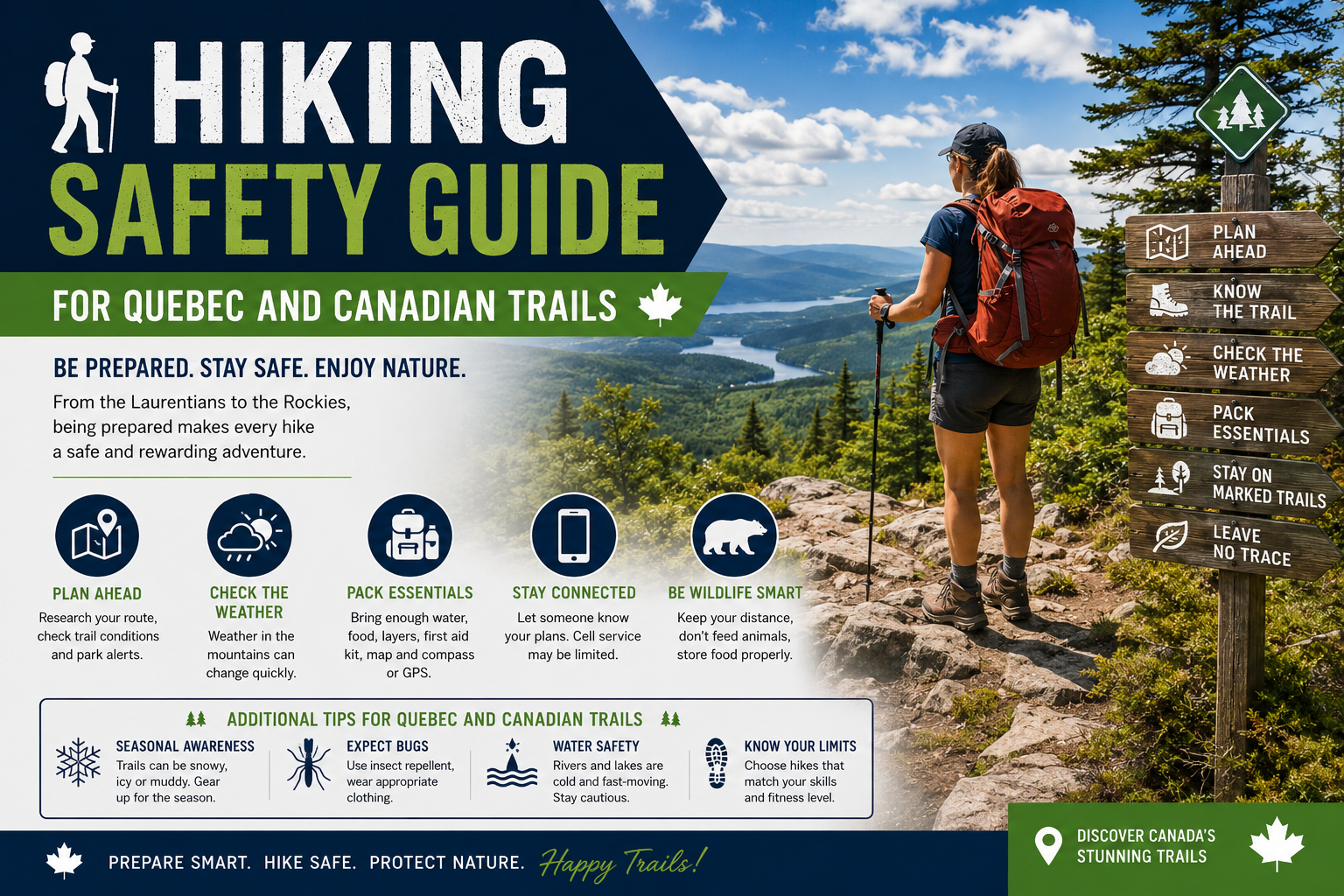
Canada is home to some of the most beautiful hiking destinations in the world. From the forests of Quebec to the mountain trails across the country, hiking offers an incredible way to explore nature, stay active, and connect with communities.
However, outdoor conditions can change quickly in Canada, especially on remote trails. Proper preparation and safety awareness are essential for every hiker and event organizer.
Check Weather Conditions Before Hiking
Weather in Canada can change rapidly, even during summer. Before leaving:
- Review the weather forecast
- Check trail alerts or closures
- Avoid hiking during storms or extreme heat
- Inform participants about expected conditions
For mountain or forest trails, temperatures may feel much colder than nearby cities.
Bring Essential Hiking Equipment
Every hiker should carry:
- Water bottle or hydration pack
- Snacks or energy bars
- Fully charged phone
- Portable power bank
- Flashlight or headlamp
- Small first-aid kit
- Rain jacket or extra clothing layer
For longer hikes, offline maps or GPS applications are highly recommended.
Stay on Marked Trails
Staying on designated trails helps:
- Prevent accidents
- Protect wildlife and natural areas
- Reduce the risk of getting lost
Avoid shortcuts and always respect local park regulations.
Hiking Safety for Group Events
If you are organizing a hiking event:
- Separate beginner and advanced hiking groups
- Assign lead organizers and sweep volunteers
- Perform regular participant head counts
- Share emergency contact information
- Define meeting points in case of separation
Organizers should also monitor participant condition throughout the hike.
Wildlife and Environmental Awareness
Canada’s natural areas may include wildlife such as bears, moose, or coyotes.
Basic recommendations:
- Do not feed wildlife
- Store food properly
- Keep distance from animals
- Respect nature and avoid littering
Leave trails cleaner than you found them.
Emergency Preparedness
Before starting a hike:
- Share your route with someone
- Know the nearest emergency access point
- Carry emergency contact information
- Understand the trail difficulty and estimated duration
If weather conditions become dangerous, it is always safer to turn back early.